
Roof Replacement Solar Guide for Commercial Properties
Commercial property owners in New Jersey face a unique set of challenges as 2025 approaches. Aging infrastructure, rising utility bills, and stricter energy rules make it critical to find solutions that protect property value and reduce costs. A roof replacement solar strategy offers a direct path to address these concerns while unlocking new financial opportunities.
This guide presents a step-by-step roadmap for integrating roof replacement with solar, designed to maximize ROI and leverage zero-capital-expenditure options. Inside, you will find actionable insights on assessing your roof and solar potential, exploring financing, planning projects, managing installation, and optimizing long-term performance.
Discover how to turn your facility’s roof into a profit-generating asset, increase property value, and secure lower energy costs with a proven, zero-CapEx approach.
Assessing Roof and Facility Readiness for Solar
Before embarking on a roof replacement solar project, commercial property owners must conduct a thorough evaluation of both roof and facility readiness. This ensures the investment delivers stable returns, maximizes energy savings, and aligns with long-term asset plans.
Evaluating Roof Age, Condition, and Suitability
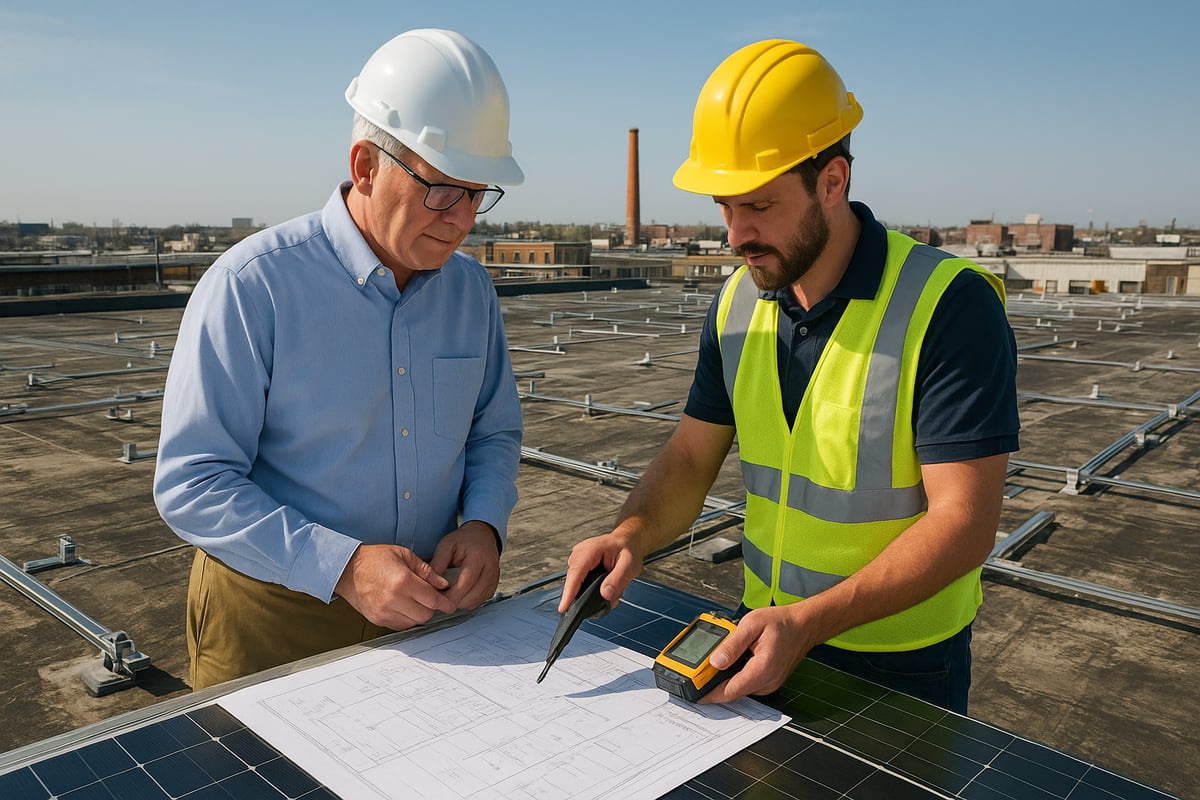
The foundation of a successful roof replacement solar project is a roof that matches or exceeds the lifespan of the planned solar array. Most commercial solar panels come with 25 to 30 year warranties, so the underlying roof must remain structurally sound throughout that period.
Different roof types offer varying longevity. Metal and tile roofs can last 40 to 50 years, making them ideal partners for solar. Asphalt roofs typically last 20 to 30 years and may require more frequent replacement. Common warning signs of deterioration include leaks, sagging, granule loss, or evidence of prior repairs.
A case in point: According to industry data, roofs older than 10 to 15 years often require replacement before solar installation to avoid costly mid-life repairs. Structural load analysis is essential to confirm the roof can support the additional weight of solar arrays. Facility managers should use a checklist covering deck integrity, drainage, and membrane condition.
Flat roofs allow for flexible solar racking and easier maintenance, while pitched roofs may demand specialized mounting solutions and careful attention to drainage. Local building codes and New Jersey’s variable weather, including heavy snow and wind, play a significant role in determining the best approach.
For a detailed breakdown of integrating roof upgrades with solar arrays, see the Commercial Solar Roof Replacement resource. This guide outlines technical requirements and best practices for commercial facilities.
Solar Resource Assessment and Energy Demand Analysis
After confirming roof readiness, the next step in any roof replacement solar plan is to evaluate on-site solar potential and energy demand. Key factors include roof orientation, available unshaded area, and the overall size of the roof. South-facing roofs with minimal shading provide optimal solar yield, but even east-west layouts can be viable with the right design.
A commercial energy use profile is critical. Assessing peak demand periods, daily load shape, and current utility costs helps determine the right system size and expected financial returns. For example, businesses with high daytime energy usage, such as manufacturing or retail, typically see the fastest payback from roof replacement solar investments.
Initial solar yield estimates should be calculated for each roof section, factoring in tilt, obstructions, and local climate. The combination of a robust roof and the right solar design enables long-term energy savings and stable returns.
Facility managers should compile data on annual energy use, utility bills, and historical roof performance. This information drives precise modeling, ensuring the roof replacement solar project is tailored to the property’s unique needs.
Zero-CapEx Roof Replacement and Solar Financing Options
Commercial property owners in New Jersey face steep upfront costs when considering roof replacement solar projects. Traditional capital expenditures can exceed $40,000 for combined roof and solar upgrades, straining budgets and delaying critical improvements. Zero-CapEx solutions remove this barrier, unlocking immediate savings and long-term value for your facility.
Understanding Zero-Upfront-Cost Models
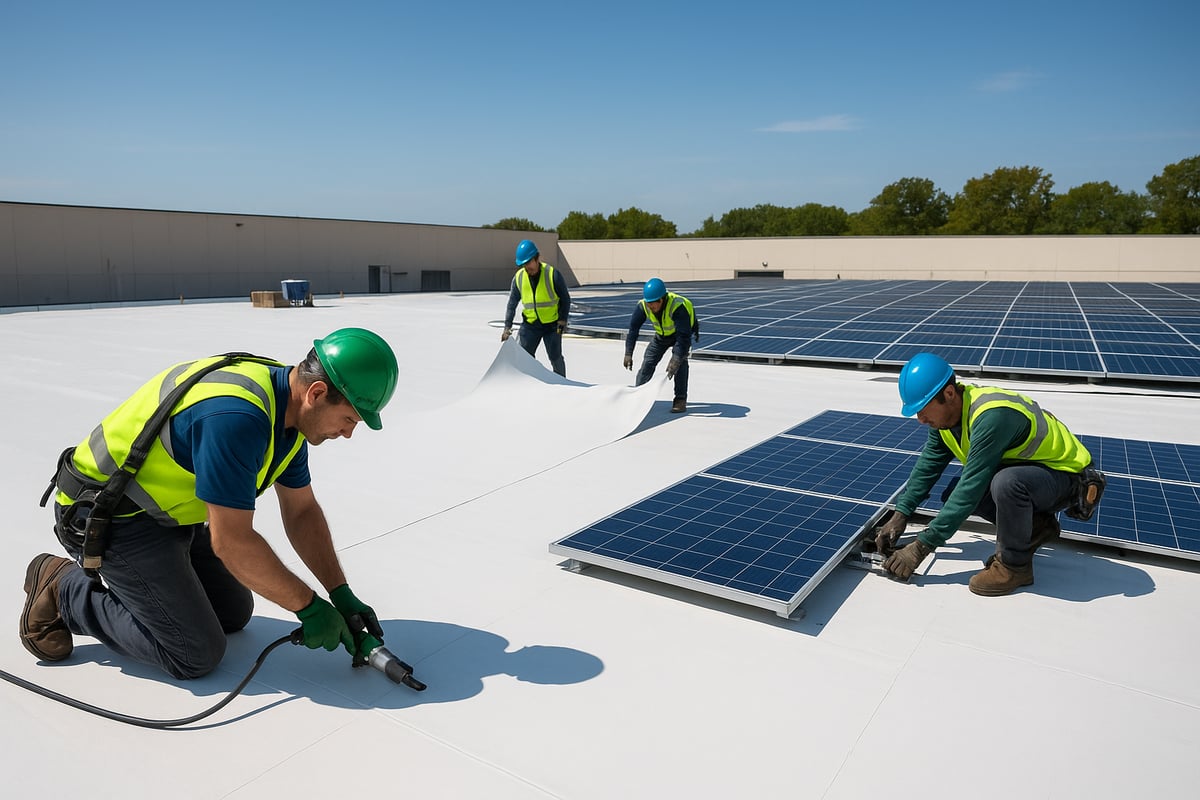
Zero-CapEx models enable businesses to implement roof replacement solar without any initial outlay. The most common structures are investor-funded Power Purchase Agreements (PPAs) and roof leases. In these arrangements, a third-party investor covers the full cost of both the new roof and solar installation. The property owner agrees to purchase the generated electricity at a fixed rate or leases their roof space for solar generation.
Bundled solutions combine no-cost roof replacement with solar installation, aligning the new roof’s lifespan with the solar system warranty. This approach ensures you get decades of worry-free operation. Compared to direct purchase, where you fund the entire project, PPAs and leases transfer risk and maintenance responsibilities to the provider.
Below is a quick comparison:
| Financing Model | Upfront Cost | Ownership | Maintenance | Typical Term |
|---|---|---|---|---|
| Direct Purchase | High | Owner | Owner | 25-30 years |
| PPA | $0 | Provider | Provider | 15-25 years |
| Lease | $0 | Provider | Provider | 15-25 years |
For a deeper dive into how these investor-backed solutions work, see Zero-CapEx Solar for Commercial Properties.
Eligibility for roof replacement solar under zero-capital-expenditure models typically requires that your property has strong structural integrity, sufficient roof space, and good credit standing. Documentation such as utility bills, roof reports, and financial statements will be needed to secure approval.
Maximizing Incentives and Tax Credits
A successful roof replacement solar project leverages every available incentive to drive down costs and boost returns. The Federal Investment Tax Credit (ITC) provides a 30% reduction in solar project costs through 2025. New Jersey’s ADI program and the SuSI initiative offer additional state-level incentives, further improving project economics.
Accelerated depreciation through the Modified Accelerated Cost Recovery System (MACRS) allows property owners to recover capital investments quickly. Monetizing Solar Renewable Energy Certificates (SRECs or RECs) in New Jersey creates a reliable revenue stream as your system generates clean energy.
To maximize incentives, work with a partner experienced in stacking federal and state programs. A recent case in New Jersey saw a commercial property owner secure a fully funded roof replacement solar project by combining ITC, state incentives, and SREC sales, resulting in zero upfront cost and immediate energy savings.
Cash Flow, Payback, and NOI Impact
Modeling the financial impact of roof replacement solar is crucial for decision-makers. Energy savings from on-site solar generation directly offset rising utility costs, while PPA or lease payments are often lower than your current electricity rates. This positive cash flow begins from day one of operation.
A well-structured roof replacement solar project can increase your property’s net operating income (NOI) by 5 to 10 percent. This translates to a higher property value and improved tenant retention, as modern infrastructure and lower operating costs are highly attractive to businesses. For example, a facility with high daytime energy use will see the fastest payback, with the solar system generating significant savings over its 25 to 30-year lifespan.
By adopting zero-CapEx models, property owners achieve long-term stability, hedge against utility rate hikes, and position assets for maximum ROI.
Project Planning: Timeline, Permitting, and Stakeholder Coordination
Careful project planning is the foundation of a successful roof replacement solar initiative in New Jersey. Each phase requires precise coordination to optimize timelines, protect assets, and ensure compliance with local regulations. By following this roadmap, property owners can maximize their investment, minimize operational impact, and capture the full benefits of zero-CapEx solutions.
Step 1: Site Evaluation and Feasibility Study
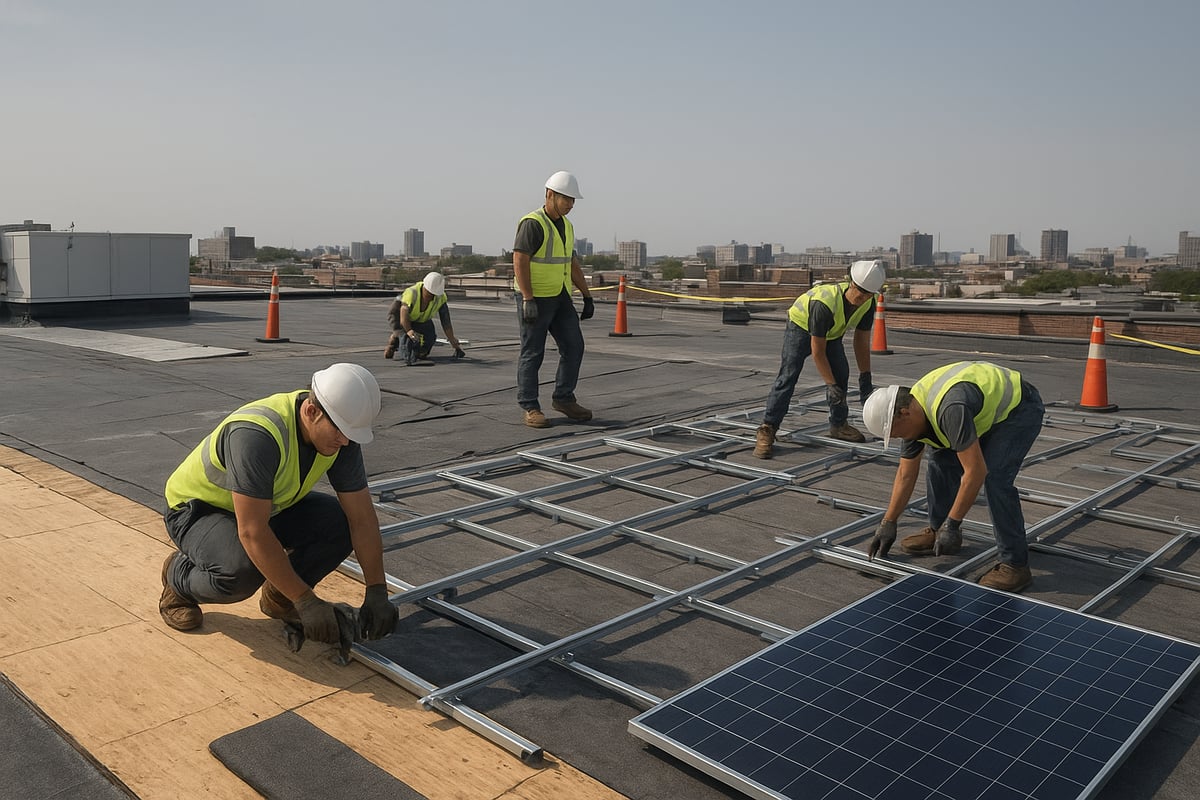
The first step in any roof replacement solar project is a thorough site evaluation. An engineering team will inspect the existing roof, assess its structural integrity, and determine whether the structure can support a new solar array. Facility managers should review the roof’s age, history of repairs, and any signs of water infiltration or sagging.
Next, a solar feasibility study is conducted. This includes mapping the roof area, analyzing shading, and calculating solar generation potential. The team will also evaluate interconnection options with the utility, ensuring the site meets New Jersey’s technical requirements.
Stakeholder alignment is critical. Owners, asset managers, and tenants must share project goals. Clear communication at this stage helps avoid costly delays later. Early identification of potential issues sets the stage for a seamless roof replacement solar process.
Step 2: Contracting and Financial Structuring
With feasibility confirmed, the next priority is selecting an experienced EPC (Engineering, Procurement, Construction) partner. The EPC should demonstrate expertise in both commercial roofing and solar installations. Proper vetting ensures your roof replacement solar project meets performance and warranty standards.
Financial structuring is equally important. Property owners must evaluate PPA, lease, and direct purchase options. Investor-backed zero-CapEx models are attractive for preserving capital and reducing risk. Negotiating contract terms that integrate roof and solar warranties is essential for long-term peace of mind.
Best practice is to include clauses that protect against unexpected repair costs and performance shortfalls. For a deeper look at how these steps can boost property value, see Boost Property NOI with Turnkey Solar.
Step 3: Permitting and Regulatory Compliance
Permitting is a complex, non-negotiable step in roof replacement solar projects. New Jersey has specific building codes, fire safety rules, and electrical standards that must be met. Early engagement with local authorities ensures smoother approvals.
The permitting process covers roof construction, solar mounting, and electrical interconnection. Utility interconnection applications often involve technical reviews and can take several weeks. Environmental and zoning considerations, such as stormwater management or historic district rules, may also affect timelines.
Staying proactive and organized reduces costly delays. Expert partners will guide you through each regulatory checkpoint, keeping your roof replacement solar project on track.
Step 4: Project Scheduling and Minimizing Disruption
Coordinating the schedule for roof replacement solar installation is vital for operational continuity. The sequencing typically begins with roof tear-off, followed by membrane installation and then solar racking. This approach minimizes the risk of damaging new roofing materials or causing leaks.
A robust communication plan is essential. Inform tenants and facility users well in advance about construction timelines, potential noise, and access restrictions. Schedule high-impact activities during off-peak hours whenever possible.
Effective scheduling helps avoid revenue loss and tenant dissatisfaction. By planning each phase strategically, owners can achieve a smooth transition and maximize the benefits of their roof replacement solar investment.
Step 5: Risk Management and Insurance
Risk management is the final, critical layer of protection for a roof replacement solar project. Comprehensive insurance coverage should include construction, equipment, and operational risks. Verify that your policy addresses liability for roof penetrations, weather-related events, and equipment failure.
Warranty alignment is another priority. Ensure that roofing, solar modules, and inverters are covered under compatible terms. This prevents disputes over responsibility if issues arise.
Establish service-level agreements with installers and service providers. Proactive risk management secures the long-term value and performance of your roof replacement solar asset.
Integrated Installation: Best Practices for Commercial Roof and Solar Projects
Integrating roof replacement solar projects for New Jersey commercial properties requires precision, coordination, and technical expertise. The following best practices ensure your investment delivers optimal ROI, long-term performance, and regulatory compliance. Each step in the process directly impacts the durability and value of your asset.
Roofing Material Selection for Solar Integration
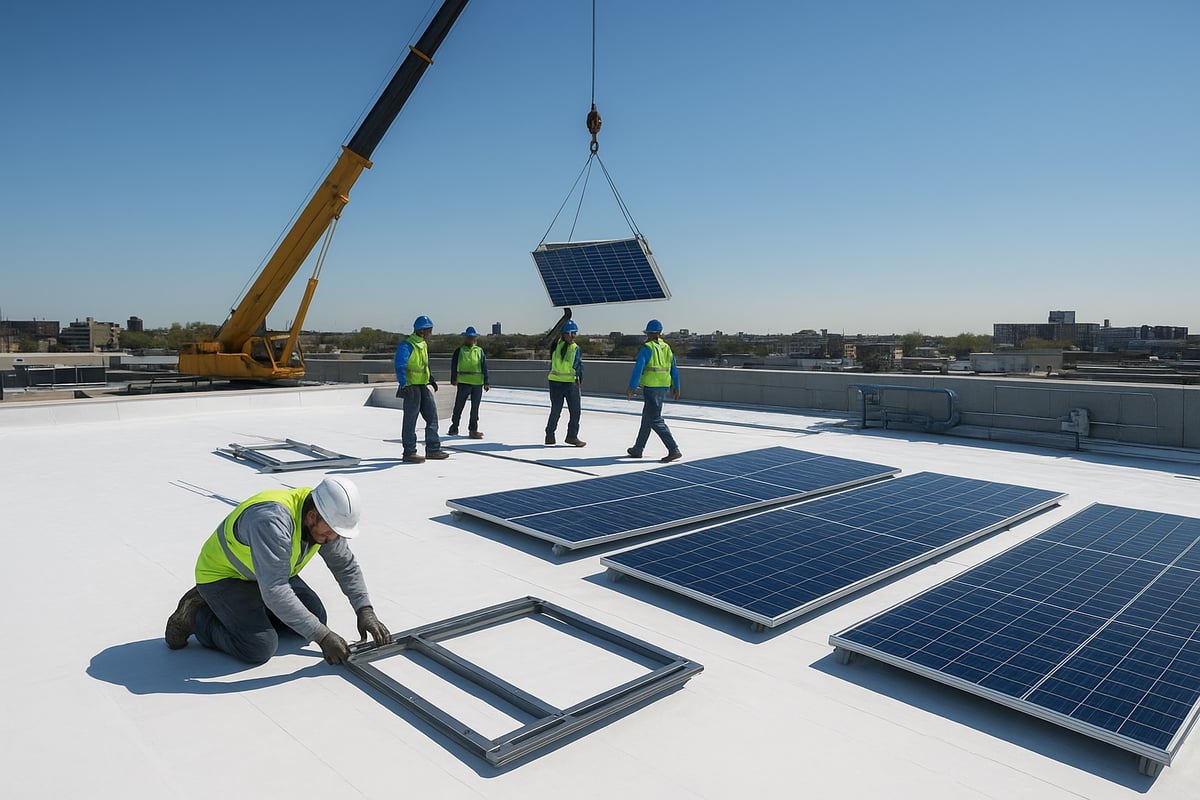
Choosing the right roofing material is foundational for any roof replacement solar strategy. The selected membrane or material must offer longevity, compatibility with solar racking, and robust warranty coverage.
Here is a quick comparison of top commercial roofing materials for solar:
| Material | Lifespan | Solar Compatibility | Reflectivity | Warranty Options |
|---|---|---|---|---|
| TPO | 20-30 yrs | Excellent | High | Solar-ready available |
| EPDM | 20-30 yrs | Good | Moderate | Standard, some solar |
| Metal | 40-50 yrs | Excellent | Variable | Extended, solar-specific |
| Cool Roof | 20-30 yrs | Excellent | Very High | Often solar-ready |
Light-colored and high-reflectivity roofs increase solar output by reducing heat absorption. For roof replacement solar installations, always confirm the roof manufacturer’s requirements for solar-ready warranties. This ensures both assets are protected and eligible for full warranty coverage.
Solar Mounting Systems and Attachment Methods
Selecting the right mounting system is critical for protecting the roof and maximizing energy production from your roof replacement solar project. Ballasted systems are often preferred for flat roofs because they avoid roof penetrations and minimize the risk of water intrusion. Mechanically attached systems, while more secure in high-wind areas, require careful waterproofing at all attachment points.
Key considerations for each mounting method:
- Ballasted racks: Fast installation, minimal disturbance, best for flat roofs.
- Mechanically attached: Required for pitched roofs or high-wind regions, needs flashing and sealing.
- Hybrid systems: Combine ballasted and mechanical for optimal performance.
- Roof load analysis: Confirm structural capacity before installation.
For roof replacement solar integration, always coordinate with both roofing and solar contractors to ensure attachment methods comply with local codes and roof warranties.
Sequencing and Quality Assurance
Proper sequencing is essential to prevent rework and ensure both roof and solar systems perform as designed. Begin roof replacement solar projects with a full roof tear-off and new membrane installation. Solar racking and panel installation must follow only after the new roof passes inspection.
Quality assurance checkpoints include:
- Pre-installation roof inspection and documentation
- Post-membrane installation inspection before racking
- Solar racking and panel inspection after installation
- Final integrated system review for both roof and solar
Collaborate closely with all contractors to avoid scope gaps and miscommunication. This disciplined approach protects your investment and ensures smooth project delivery.
Safety and Compliance
Safety standards and regulatory compliance are non-negotiable for roof replacement solar projects. Commercial sites must adhere to OSHA requirements for fall protection, electrical safety, and proper equipment use. Fire code compliance is critical, especially for solar array spacing, access pathways, and emergency shutdown labeling.
Documentation is key for both warranty validation and regulatory audits:
- Maintain installation records for roof and solar components
- Ensure all permits, inspection reports, and warranty documents are accessible
- Train staff on emergency procedures and maintenance protocols
By prioritizing safety and compliance at every stage, property owners safeguard both their asset and their workforce, ensuring long-term stability and value from roof replacement solar investments.
Long-Term Performance, Maintenance, and Asset Management
Long-term performance is the foundation of a successful roof replacement solar investment. For New Jersey commercial property owners, proactive asset management ensures that both your new roof and solar system consistently deliver energy savings, operational stability, and increased property value. From day one, a strategic approach is essential to protect your investment and maximize the benefits of integrated onsite generation.
Monitoring and Maintaining Roof and Solar Assets
Effective monitoring is critical for preserving the value of your roof replacement solar project. Modern systems use remote monitoring platforms to track real-time solar production, instantly detecting faults or dips in performance. These tools alert facility managers to issues before they escalate, reducing downtime and lost revenue.
Scheduled inspections are equally important. After installation, plan annual roof assessments to identify early signs of wear, potential leaks, or membrane damage beneath the solar array. Data-driven maintenance, such as thermal imaging or drone surveys, helps pinpoint trouble spots quickly.
Key maintenance actions include:
- Reviewing solar output data monthly
- Clearing debris from panels and roof drains
- Inspecting flashing and penetrations for water tightness
A disciplined maintenance routine keeps your roof replacement solar asset running efficiently, minimizing surprises and repair costs.
Warranty Claims and Service Coordination
Navigating warranties for a roof replacement solar project can be complex. Most commercial roofs and solar modules carry separate warranties, often ranging from 20 to 30 years. Inverters may have shorter coverage periods, so it is vital to understand each policy’s terms.
If roof repairs are needed under warranty, solar panels may have to be temporarily removed and reinstalled. Typical costs for this service range from $1,500 to $6,000 according to industry data, so budgeting for this possibility is prudent.
Service-level agreements (SLAs) with your providers streamline warranty claims. An effective SLA clarifies response times, outlines responsibilities for roof and solar maintenance, and ensures seamless coordination when multiple parties are involved. This approach protects your roof replacement solar investment and reduces operational risk.
Maximizing ROI Over 25+ Years
Maximizing the return on your roof replacement solar system requires tracking energy savings and aligning your asset strategy with corporate sustainability goals. Remote monitoring platforms generate detailed reports to support ESG and LEED certifications, a growing priority for New Jersey businesses.
Regularly review incentive programs and policy changes. For example, the New Jersey Solar Incentives Overview provides insight into evolving state and federal benefits, helping you plan for upgrades or expansions.
Future-proofing your asset means evaluating when to add storage, upgrade inverters, or expand your solar capacity. Early planning ensures your roof replacement solar system delivers consistent NOI growth and long-term stability.
Zero-CapEx Commercial Solar and Roof Replacement with Solar Cents
Commercial property owners in New Jersey are under pressure to modernize facilities, control utility expenses, and comply with new regulations. Solar Cents delivers a proven roadmap to achieve these goals with zero-CapEx roof replacement solar solutions tailored for demanding business environments.
With more than 175 MW installed and two decades of EPC experience, Solar Cents stands apart for its deep expertise in commercial and industrial solar. Clients benefit from a track record of successful roof replacement solar projects across New Jersey, ensuring confidence in both performance and reliability.
Solar Cents offers fully funded roof replacement solar programs that allow property owners to upgrade aging infrastructure and install on-site solar generation without any upfront capital. This approach eliminates the financial barrier and preserves cash flow, while reducing long-term energy costs and supporting sustainability targets.
Financing is flexible and designed for business needs. Commercial clients can choose from Power Purchase Agreements (PPAs), operating leases, or direct purchase options, each structured to maximize ROI and align with strategic objectives. For a detailed breakdown of these options, see the Solar Leasing vs. PPA Comparison page, which clarifies the pros and cons of each financing path for roof replacement solar projects.
Solar Cents ensures clients capture every available incentive. The team navigates federal programs like the 30% Investment Tax Credit and state-specific initiatives such as New Jersey’s ADI and Competitive Solar Incentive Program to deliver the strongest financial results. Bundling these incentives with accelerated depreciation and SREC/REC monetization yields superior project economics and a measurable increase in property value.
End-to-end project management is central to the Solar Cents model. From feasibility studies and structural assessments to permitting, installation, and long-term maintenance, every phase of the roof replacement solar process is handled by a dedicated team. This single-source responsibility streamlines timelines, reduces risk, and ensures warranty protection for both roof and solar assets.
Roof space is a hidden asset. With Solar Cents, owners can monetize underutilized rooftops through community solar hosting or direct on-site generation, creating new revenue streams while supporting the grid and local sustainability goals.
Solar Cents provides free solar asset evaluations for commercial property owners. These consultative assessments identify the best path to maximize ROI, future-proof assets, and unlock long-term energy savings with a roof replacement solar solution. Take action now to secure your facility’s position in the evolving 2025 energy landscape.
Future-Proofing Your Asset: Trends and Opportunities for 2025 and Beyond
Commercial property owners in New Jersey face a rapidly shifting energy landscape. As utility costs increase and regulations evolve, aligning your roof replacement solar strategy with future trends is crucial for maximizing ROI and securing long-term value.
Evolving Regulatory and Market Landscape
The regulatory environment for commercial solar is expected to shift significantly after 2025. Federal incentives like the Investment Tax Credit (ITC) are slated for changes, with proposals to phase out solar energy tax credits by 2028. For those considering roof replacement solar projects, early action is critical to leverage current incentives. You can review the latest on the Federal Investment Tax Credit Phase-Out for details on how these changes could impact financing.
In New Jersey, commercial clients face rising utility rates and increasing demand charges. Community solar and microgrid participation are gaining momentum, offering new ways to monetize underutilized roof space and hedge against future rate hikes. Proactive planning ensures your assets remain competitive as market dynamics shift.
Innovations in Commercial Solar and Roofing
Technology is advancing rapidly in the roof replacement solar sector. Next-generation modules, including high-efficiency and bifacial panels, deliver greater output per square foot. Integrated PV roofing systems are emerging, streamlining installation and maximizing usable space.
Roofing materials are also evolving. Manufacturers now offer longer warranties and improved compatibility with solar mounting systems. Smart inverters and advanced energy management tools allow for demand response and better load control, driving additional value from on-site generation.
State-level incentives encourage local production and innovation. Programs like the New Jersey Manufacturing Program offer tax credits for solar component manufacturing, making it even more attractive to invest in advanced roof replacement solar solutions built locally.
Strategic Asset Planning
Positioning your property for future energy market shifts requires a forward-looking approach. A strategic roof replacement solar plan can integrate battery storage or electric vehicle charging infrastructure, opening new revenue streams and enhancing tenant appeal.
Early adopters in New Jersey are leveraging community solar to generate consistent income from roof space. ESG and LEED certification requirements are tightening, and assets with integrated solar and modern roofing stand out in sustainability reporting.
Comprehensive planning includes reviewing system upgrade paths and scheduling maintenance windows that align with both roofing and solar warranties. This approach safeguards cash flow and ensures long-term energy savings.
Key Takeaways for Decision Makers
Aligning roof replacement solar investments with upcoming trends delivers measurable benefits. Zero-CapEx models allow property owners to act now, securing incentives and accelerating project timelines.
On-site generation not only reduces operating costs but also enhances asset value and net operating income. Early engagement with incentive programs and investor-funded options positions your property for stability as regulations and utility rates evolve.
Act decisively in 2026 to maximize savings, future-proof your assets, and maintain a competitive edge in New Jersey’s commercial real estate market.
As you look ahead to 2026, combining a roof replacement with a solar installation is one of the smartest ways to boost your property’s value and cut long-term energy costs—with no upfront investment required. We’ve walked through how zero-capital-expenditure models, tailored engineering, and the latest incentives can work together to future-proof your asset. If you’re ready to see how these strategies could work for your building, let’s take the next step together.
Request a Zero CapEx Solar & Roof Replacement Proposal
and discover how you can unlock savings and new revenue for years to come.
