
High energy bills and expensive repairs are squeezing commercial property owners across New Jersey. Aging roofs, deferred maintenance, and rising electric rates make it harder for multifamily owners, landlords, and operators to control costs.
This guide breaks down the true commercial solar installation cost for 2025. You will learn what drives pricing, how new trends and incentives impact your budget, and why no-CapEx solar and roof replacement can solve persistent maintenance issues.
If you are ready to reduce OpEx, increase NOI, and tackle upgrades with zero out-of-pocket costs, read on and discover Smart Solar Solutions for Businesses.
2025 Commercial Solar Installation Cost Trends
Rising electric rates and grid instability are making operational expenses (OpEx) unpredictable for New Jersey commercial property owners. Many multifamily landlords and operators are seeing their utility bills climb, especially for common-area loads, which directly impacts net operating income (NOI). As a result, understanding the commercial solar installation cost landscape in 2025 is more important than ever for those seeking to stabilize expenses and address deferred maintenance issues.
Electricity rates in New Jersey have increased faster than the national average over the last three years. This trend is expected to continue in 2025 due to higher demand, supply constraints, and aging grid infrastructure. For commercial and multifamily properties, these rising costs create urgency to explore no-CapEx solar, roof replacement with solar, and microgrid solutions that can deliver immediate OpEx reduction.
Commercial solar installation cost trends in 2025 reflect both national and local influences. Nationally, average installed costs for commercial solar are projected to range from $2.00 to $2.75 per watt, according to NREL data. However, New Jersey’s market can see slightly higher pricing due to local labor rates, permitting, and building codes. Technology improvements, such as higher-efficiency panels and smarter inverters, are helping offset inflation and supply chain pressures. For owners, this means better long-term value and performance.
Let us compare typical commercial solar installation cost ranges for different property types:
| Building Type | Typical System Size | Price per Watt (2025) | Total Installed Cost |
|---|---|---|---|
| Multifamily | 100–250 kW | $2.10–$2.65 | $210,000–$662,500 |
| Industrial | 250–500 kW | $2.00–$2.50 | $500,000–$1,250,000 |
| Retail/Office | 50–150 kW | $2.20–$2.75 | $110,000–$412,500 |
For example, a 100kW rooftop system for a multifamily property in New Jersey may cost between $210,000 and $265,000 before incentives. This investment can be structured as a no-CapEx commercial solar project, allowing owners to replace an aging roof and install solar with zero out-of-pocket expense. For larger industrial sites, installing a 500kW system may range from $1,000,000 to $1,250,000, with significant utility savings and improved NOI.
Supply chain disruptions and inflation have impacted equipment and labor costs, but integrating roof replacement with solar can unlock additional savings. Many properties with deferred maintenance or aging roofs can use solar funding to resolve these issues, minimizing future OpEx surprises. Electrical upgrades and switchgear modernization are often bundled with these projects, further stabilizing energy costs and reducing risk.
If you want to see real-world examples of commercial solar installation cost outcomes for New Jersey properties, visit these Commercial solar case studies for detailed breakdowns and results. These case studies highlight how smart solar solutions for businesses can turn liabilities like deferred maintenance into assets, driving NOI and reducing operational headaches.
In summary, 2025 will see commercial solar installation cost remain competitive despite market pressures, thanks to technology gains and creative financing options. For multifamily owners, landlords, and commercial operators, now is the time to consider no-CapEx solar, roof replacement with solar, and microgrid solutions to control OpEx, extend asset life, and future-proof your property.
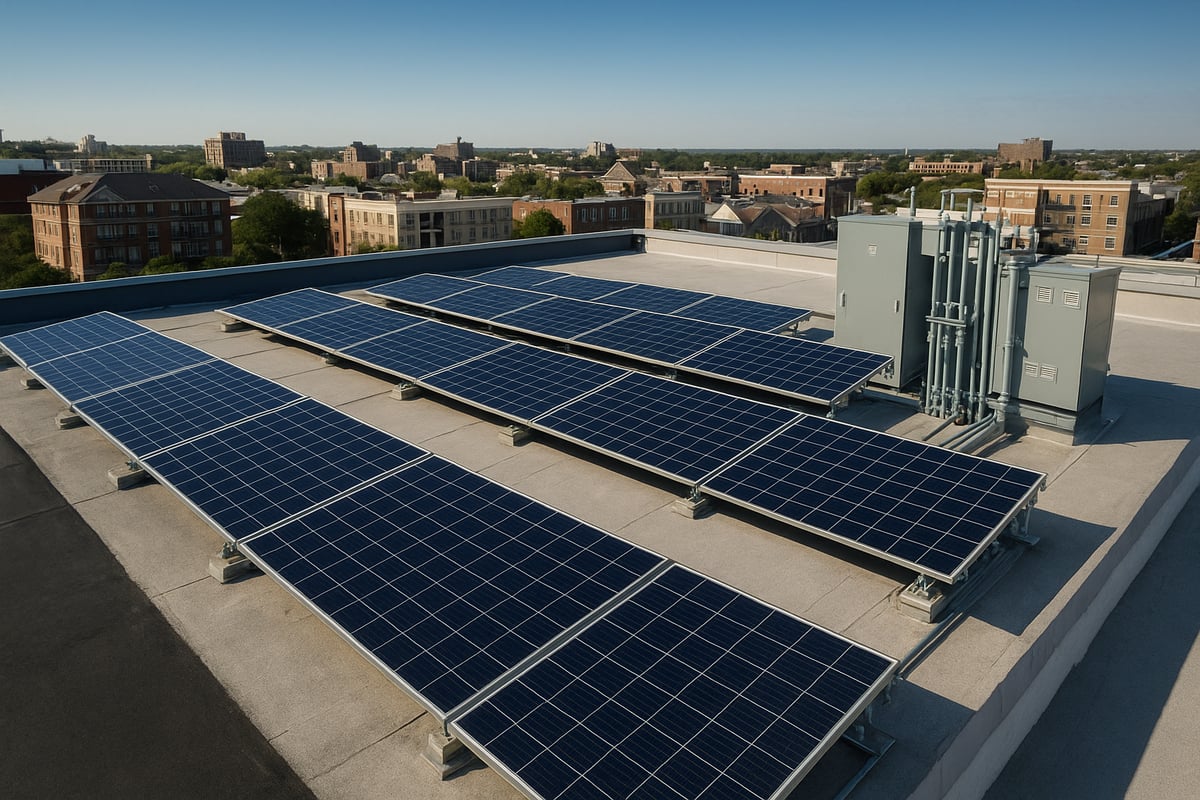
Breaking Down the Cost of Commercial Solar Installations
Understanding the commercial solar installation cost starts with knowing what drives your project budget. For New Jersey property owners, every dollar counts, especially with aging roofs, rising electric rates, and deferred maintenance issues. Let’s break down the main cost components so you can align your upgrades with OpEx reduction and NOI growth.
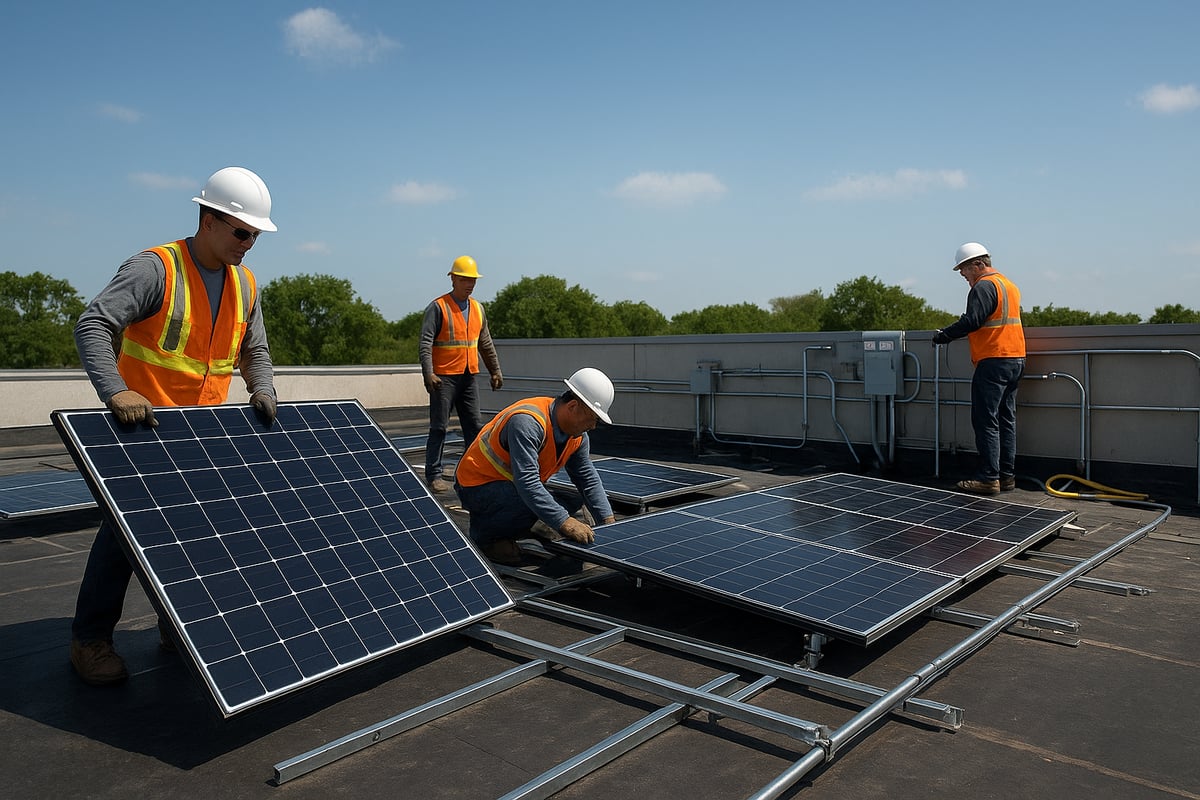
System Size and Energy Needs
The size of your solar system is the biggest factor in your commercial solar installation cost. System size, measured in kilowatts (kW) or megawatts (MW), depends on your building’s energy consumption and goals for offsetting common-area loads. Multifamily properties often have high utility costs for lighting, elevators, and HVAC, while industrial sites may have larger peak loads from machinery.
To right-size your system, review 12 months of electric bills and identify patterns. For multifamily buildings, focus on common-area meters and shared amenities. Industrial and retail sites should assess both base and peak loads. A typical 250kW system for a multifamily property could range from $500,000 to $687,500 before incentives, depending on technology and site conditions.
Energy efficiency measures, like LED retrofits or smart controls, can lower the system size needed, reducing your commercial solar installation cost. Electrical upgrades and switchgear replacements may be required, especially for older properties. These improvements not only support solar but also address deferred maintenance, making your property more resilient and attractive to tenants.
Equipment, Technology, and Installation Variables
The next layer of commercial solar installation cost comes from your equipment choices and site conditions. Panel types—monocrystalline, bifacial, or thin film—impact both price and return on investment. Monocrystalline panels are most common for New Jersey rooftops, offering high efficiency and long-term performance. Bifacial panels can boost production but may cost more upfront.
Key system components include inverters, racking, and switchgear. Electrical upgrades are often needed for older multifamily and commercial buildings. Roof type and age play a major role in installation strategy. If your roof is aging, combining roof replacement with solar can be a cost-effective solution. In fact, integrating both often unlocks no-CapEx commercial solar options and resolves deferred maintenance. For more details, see this Commercial solar roof replacement guide.
Mounting options—rooftop, ground-mount, or carport—affect both installation complexity and budget. Battery storage and microgrid solutions add to the commercial solar installation cost but can deliver long-term savings and energy resilience. Consider this table for a quick comparison:
| Option | Upfront Cost | OpEx Impact |
|---|---|---|
| Traditional reroofing only | High | No energy savings |
| Roof replacement with solar | Offset by incentives, often no upfront cost | Significant utility savings, resolves maintenance |
| Solar + battery/microgrid | Highest | Maximum resilience, OpEx stability |
Labor, Permitting, and Soft Costs
Labor and soft costs make up a significant portion of the commercial solar installation cost in New Jersey. Skilled labor, engineering, and project management are essential for quality and code compliance. Labor rates can be higher in New Jersey due to union requirements and local wage standards.
Permitting and utility interconnection add both time and expense. Expect permitting to take several weeks, with utility approvals sometimes extending timelines further. Soft costs also include design, energy modeling, and financing fees. For busy multifamily owners and commercial landlords, turnkey project management is invaluable. It streamlines the process, ensures code compliance, and helps avoid costly delays.
When planning your project, factor in these hidden costs alongside equipment and installation. A transparent, turnkey provider will help you manage every aspect of the commercial solar installation cost, from initial feasibility to final commissioning, so you can focus on reducing OpEx and boosting NOI.
Financing Options: No-CapEx Solar, Roof Replacement, and Ownership Models
As energy prices climb and roofs age across New Jersey, property owners face tough choices. Fortunately, no-CapEx commercial solar installation cost solutions now allow multifamily and commercial operators to fund major upgrades like roof replacement with solar, microgrids, and electrical improvements—with zero upfront investment.
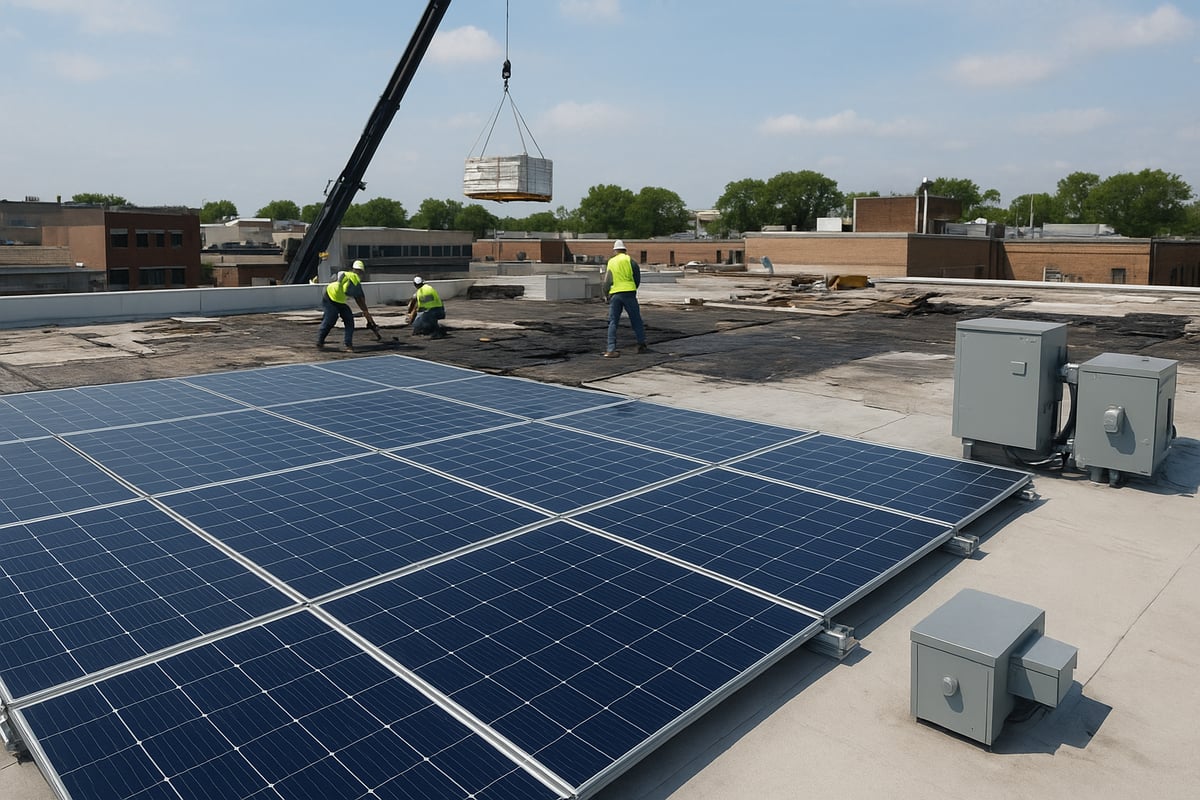
No-CapEx Solar and Roof Replacement Programs
No-CapEx commercial solar installation cost programs are designed for property owners who want to upgrade their buildings without tapping capital reserves. These solutions bundle solar, electrical upgrades, and even full roof replacement with solar into a single, zero out-of-pocket project. The provider covers all costs, then recoups the investment through a long-term Power Purchase Agreement (PPA) or roof lease.
With a PPA, you purchase clean power at a fixed rate, often below utility prices, which immediately reduces OpEx and stabilizes your budget. If your roof needs replacement, many providers will include a new roof as part of the solar package, eliminating deferred maintenance concerns. Roof leasing and community solar hosting can unlock extra revenue streams, as your property becomes a local energy hub.
For example, a multifamily owner in Newark replaced a 20-year-old roof and installed a 300kW solar system, all with no capital expense. The result was lower utility bills, a brand new roof, and improved property value. No-CapEx models transform major upgrades from a liability into a profit driver, especially for those facing high common-area utility costs or multifamily electrical upgrades.
Direct Purchase vs. Third-Party Ownership
When evaluating commercial solar installation cost, ownership structure is a key decision. Direct purchase means you own the solar system, capture all tax credits and incentives, and maximize long-term ROI. However, this requires significant upfront capital and responsibility for maintenance and performance.
Third-party ownership, through PPAs or leases, shifts the financial and operational burden to the provider. You get the benefits of solar—lower OpEx, predictable energy costs, and deferred maintenance solutions—without the capital spend. This is especially attractive for landlords or operators focused on NOI and asset value.
To help compare these options, this Solar leasing vs. PPA overview breaks down the cost implications, contract terms, and savings scenarios for New Jersey properties. Choosing the right model depends on your financial goals, risk tolerance, and whether you prefer immediate savings or long-term asset ownership. Both approaches can be paired with roof replacement with solar, electrical upgrades, and Smart Solar Solutions for Businesses.
Microgrids, Battery Storage, and Behind-the-Meter Solutions
For properties seeking even greater resilience and control over utility costs, microgrid solutions and battery storage can be integrated into your commercial solar installation cost strategy. These behind-the-meter upgrades provide backup power during grid outages, support EV charging, and help manage peak demand charges.
Financing for microgrids and storage often mirrors no-CapEx solar models, with options for PPAs, leases, or shared savings agreements. This means you can boost energy security and OpEx reduction without upfront expense. A New Jersey commercial landlord recently installed a solar microgrid, battery storage, and upgraded switchgear, locking in predictable costs and ensuring uninterrupted operations during storms.
By combining solar, storage, and electrical modernization, you can address deferred maintenance, stabilize expenses, and increase NOI—all while meeting tenant expectations for reliability and sustainability.
Incentives, Tax Credits, and New Jersey Solar Programs in 2025
Staying ahead of rising utility bills and deferred maintenance starts with understanding every dollar available to offset your commercial solar installation cost. For New Jersey multifamily owners, landlords, and commercial property operators, 2025 offers a robust mix of federal, state, and local incentives. These programs can dramatically reduce out-of-pocket expenses, fund roof replacement with solar, and maximize NOI.
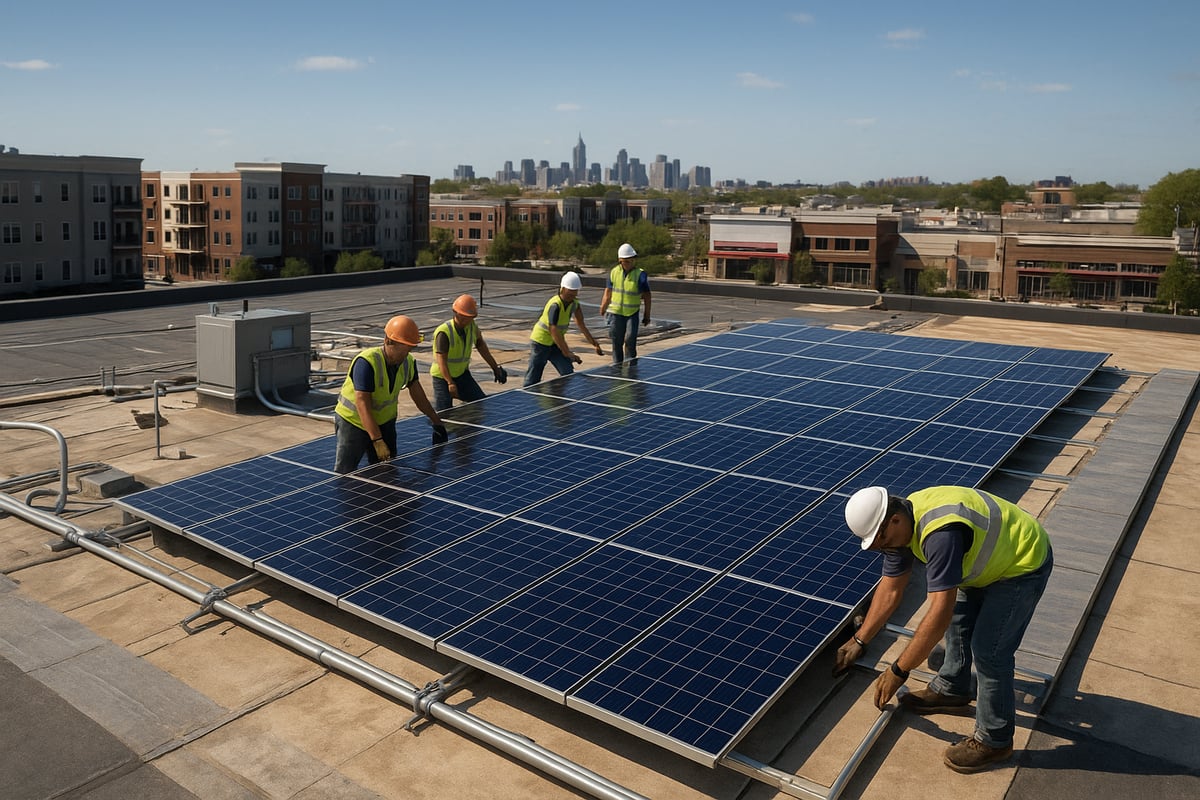
Federal Incentives and Tax Credits
The federal government continues to offer strong incentives for reducing your commercial solar installation cost. The 30% Federal Investment Tax Credit (ITC) remains in place for 2025, applying to both solar and battery storage projects. This credit can be claimed directly against your tax liability, making it a key driver for multifamily electrical upgrades and no-CapEx commercial solar.
Bonus credits are available for projects that use domestic content, are located in low-income areas, or include energy storage. These can add up to 10-20% in additional savings. Accelerated depreciation through MACRS allows property owners to quickly recover a large portion of the commercial solar installation cost in the first year, improving project ROI and freeing up cash for other capital improvements.
A simple summary of federal incentives:
| Incentive | Value | Applies to |
|---|---|---|
| Federal ITC | 30% of project cost | Solar, storage |
| Bonus Credits | +10-20% | Storage, domestic content |
| MACRS Depreciation | ~25% first-year value | Solar, storage |
Understanding these federal programs is crucial when planning system upgrades, switchgear replacement, and microgrid solutions for your property.
New Jersey-Specific Solar Incentives
New Jersey’s incentive landscape is among the best in the U.S. The ADI (Administratively Determined Incentive) program pays commercial property owners a set amount per kWh generated, directly improving the commercial solar installation cost payback. The SREC-II (Successor Solar Incentive) program issues certificates for each MWh produced, which can be sold to utilities for additional revenue.
Community solar and net metering policies are especially valuable for multifamily and commercial buildings. They allow owners to offset high common-area utility costs and even create new revenue streams by hosting solar for others. For example, a New Jersey multifamily owner can stack ADI payments, federal ITC, and SREC-II proceeds for a true zero out-of-pocket project.
Eligibility and application processes are detailed in the SolarReviews Guide to New Jersey Solar Incentives 2025, which is a valuable resource for busy owners seeking to maximize their returns.
Utility Rebates and Local Grants
Beyond state and federal programs, local utilities frequently offer rebates for electrical upgrades, battery storage, and energy efficiency measures. These rebates can further lower the commercial solar installation cost, especially when paired with roof replacement with solar or microgrid integration.
Municipal and county grants are also available for deferred maintenance projects, such as replacing aging roofs or upgrading switchgear as part of a solar installation. The smartest approach is to stack these incentives, combining utility rebates, grants, and state/federal tax credits. This strategy ensures the lowest possible commercial solar installation cost and the greatest NOI improvement.
To make the most of these programs, work with a turnkey provider who understands the New Jersey landscape and can identify every opportunity for OpEx reduction, NOI growth, and zero out-of-pocket upgrades.
Step-by-Step Guide: Commercial Solar Installation Process in 2025
Navigating the commercial solar installation cost landscape in New Jersey requires a clear, actionable process. For multifamily owners and commercial property operators facing high utility bills, aging roofs, and deferred maintenance, this guide breaks down each essential step. Following this path ensures you control costs, maximize incentives, and deliver long-term OpEx savings.
1. Site Assessment and Feasibility Study
Every successful project starts with a thorough site assessment. Experts evaluate your roof’s age, condition, and structural capacity—especially important for owners with deferred maintenance or leaking roofs. Electrical infrastructure is reviewed for compatibility with solar, battery storage, and microgrid solutions.
A detailed energy usage analysis targets common-area loads, tenant consumption, and identifies opportunities for multifamily electrical upgrades. This step is vital for accurately projecting commercial solar installation cost and right-sizing the system to meet your OpEx reduction goals.
To understand the process and key cost drivers, see How commercial solar works.
2. System Design and Proposal
With data in hand, engineers customize your system for maximum value. This includes selecting panel types, inverters, and racking that fit your building’s needs and budget. Roof replacement with solar is considered if your roof is aging or due for upgrades, often allowing you to bundle costs with no-CapEx commercial solar programs.
Designs can integrate microgrid solutions, battery storage, and EV charging for added resilience and NOI growth. You receive a detailed proposal showing projected savings, OpEx reduction, and timelines, making it easy to compare commercial solar installation cost scenarios.
3. Permitting, Incentive Applications, and Approvals
Permitting and incentives are critical for New Jersey projects. Experts navigate state and local requirements, securing utility interconnection and building permits.
Applications for federal and state programs—such as the ITC, ADI, and SREC incentives—are prepared to maximize your financial return. This stage keeps your commercial solar installation cost predictable by ensuring all rebates and credits are in place before work begins.
Clear communication on timeline expectations helps you plan around tenant needs and operational schedules.
4. Installation, Commissioning, and Performance Management
Installation is scheduled to minimize tenant disruption. Crews handle roof replacement with solar, electrical upgrades, and switchgear modernization, addressing deferred maintenance without added capital expense.
After system buildout, commissioning ensures safety and code compliance. Performance monitoring tools are set up for ongoing OpEx tracking. Professional installation and proactive management protect your investment and stabilize energy costs for years.
5. Ongoing Savings, Reporting, and Asset Management
Once your system is live, monthly utility savings and NOI improvements are tracked in real time. Warranties and performance guarantees provide peace of mind, while scheduled maintenance supports long-term reliability.
Asset management includes analyzing production data for future upgrades, like adding battery storage or expanding microgrid solutions. This holistic approach keeps your commercial solar installation cost low, prolongs roof life, and ensures you capture every available incentive.
Maximizing ROI: Reducing OpEx and Increasing NOI with Solar
Commercial property owners in New Jersey face rising utility bills, aging roofs, and deferred maintenance challenges. Understanding commercial solar installation cost is the first step to turning these pain points into opportunities for increased NOI and stabilized operating expenses.
Stabilizing Energy Costs and Reducing OpEx
Solar and roof replacement projects transform unpredictable energy expenses into stable, long-term savings. By investing in no-CapEx commercial solar, owners can lock in lower electricity rates and avoid future price spikes.
Consider the impact on OpEx:
| Utility Cost Scenario | Pre-Solar (Annual) | Post-Solar (Annual) |
|---|---|---|
| Electric (Common Area) | $27,000 | $11,000 |
| Maintenance/Repairs | $8,000 | $3,000 |
| Total OpEx | $35,000 | $14,000 |
These savings are possible through programs like New Jersey Board of Public Utilities Incentives, which reduce the commercial solar installation cost and increase project ROI. Lower utility bills directly boost cash flow, making solar a strategic upgrade for multifamily and commercial assets.
Increasing NOI and Turning Deferred Maintenance into Value
Reducing OpEx is only part of the equation. With solar and roof replacement funded through power purchase agreements, property owners can eliminate out-of-pocket expenses and convert deferred maintenance into a value-add opportunity.
Aging roofs become assets when upgraded in tandem with solar, improving building envelope and attracting quality tenants. Roof leasing and community solar hosting create new revenue streams, further increasing NOI. By leveraging incentives and programs, owners can maximize returns and future-proof their properties against rising energy costs.
For detailed program comparisons and ROI projections, visit EnergySage New Jersey Solar Incentives 2025.
Electrical Upgrades and Value-Add Opportunities
Modernizing electrical infrastructure is key to maximizing solar ROI. Multifamily electrical upgrades and switchgear replacements support system reliability and open doors for future enhancements like EV charging and battery storage.
These improvements not only reduce risk but also position properties for long-term value growth. Integrating microgrid solutions ensures resilience and operational stability, especially during grid disruptions.
Case Study: No-CapEx Solar and Microgrid Boost for New Jersey Landlord
A New Jersey landlord recently faced high utility bills and an aging roof. By choosing a no-CapEx commercial solar installation cost model, they replaced the roof, upgraded switchgear, and installed a microgrid without any upfront expense.
Within the first year, OpEx dropped by over 60 percent, while NOI increased due to new lease revenue from community solar participation. The property’s market value rose, and tenant satisfaction improved thanks to reliable, clean energy.
Best Practices for Maximizing Solar ROI
For busy owners, partnering with experienced turnkey providers is crucial. Look for experts who manage everything from feasibility to maintenance, ensuring every upgrade is optimized for savings and NOI growth.
Prioritize solutions that address deferred maintenance, stabilize energy costs, and offer flexible financing. Regularly review performance data to identify further opportunities for OpEx reduction and long-term asset value.
As we’ve explored in this guide, understanding the true cost and value of commercial solar in 2025 means weighing everything from energy savings and roof upgrades to incentives and ongoing performance. If you’re considering how solar can help you control expenses, boost your property’s NOI, or finally address deferred maintenance, the next step is simple. Let’s take the guesswork out of your project and show you exactly how much you could save—both immediately and for years to come. Ready to see what’s possible for your building? See How Much Your Business Can Save on Energy
