
Understanding the commercial solar panel installation cost is essential for property owners planning solar in 2025. Commercial solar panel installation cost is a major concern for property owners in 2025 as energy bills continue to rise. Rising energy bills and unpredictable regulations are challenging every commercial property owner in 2025. The commercial solar panel installation cost has become a critical factor for businesses seeking to control expenses and secure long-term resilience.
This guide delivers clear answers on pricing, value drivers, and cost-saving strategies for commercial solar. You will find detailed cost breakdowns, ROI insights, financing solutions, incentive programs, and a practical roadmap for planning your project.
Ready to increase asset value, stabilize energy costs, and take control of your property’s future? Start here for a comprehensive approach to commercial solar in 2025.
Understanding what drives the commercial solar panel installation cost in 2025 is essential for property owners and asset managers seeking energy resilience and long-term savings. Each project is unique, shaped by technical, operational, and site-specific factors that ultimately determine investment value and payback.
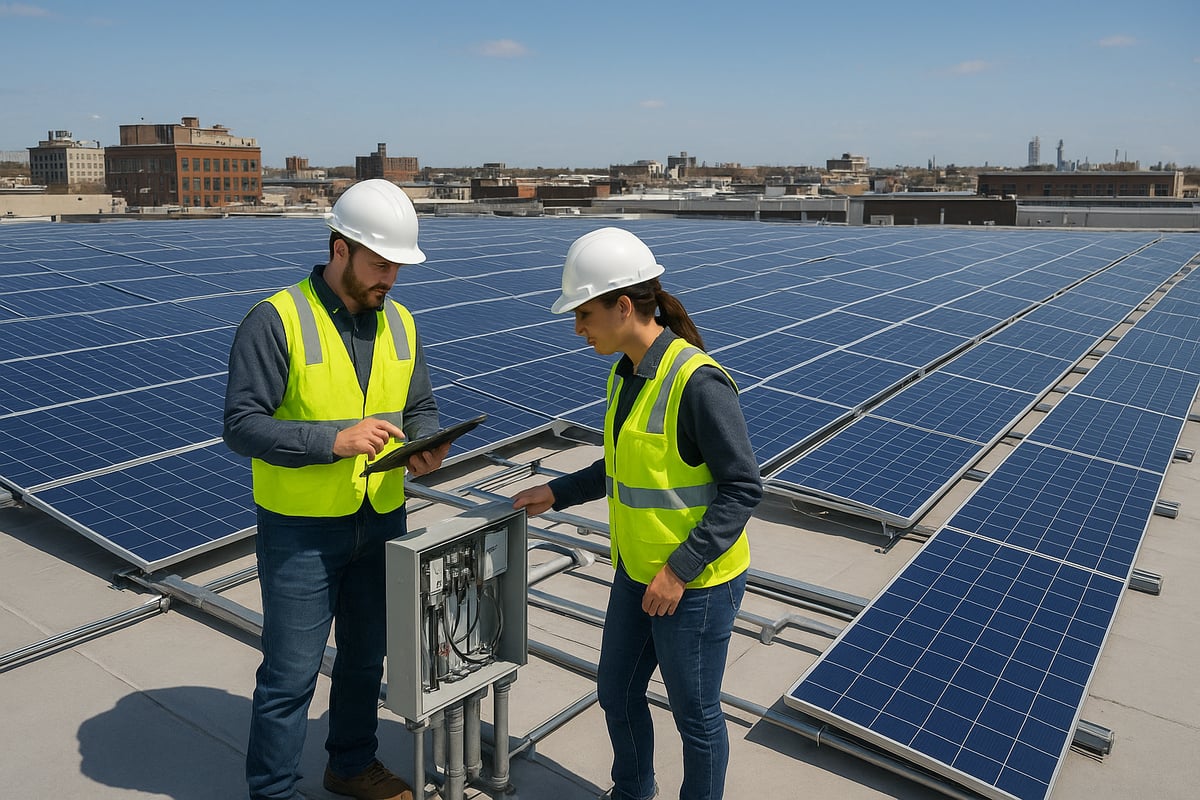
System size is the most significant determinant of commercial solar panel installation cost. Larger systems, measured in kilowatts (kW) or megawatts (MW), deliver greater energy output and economies of scale, but require higher upfront investment. For example, a typical small business may require a 50–100 kW system, while logistics centers and industrial facilities often deploy arrays in the 250 kW to multi-megawatt range.
Energy usage patterns also play a critical role. Facilities with high peak demand or irregular load profiles benefit from careful sizing to maximize offset and savings. A 100 kW system, for instance, can yield around 136,000 kWh per year, with an average pre-incentive cost of $200,000. However, costs can vary significantly between a boutique retail site and a large warehouse due to differences in load, roof area, and utility tariffs.
Accurate analysis of utility bills, including demand charges and seasonal fluctuations, is vital for right-sizing and future-proofing. The National Renewable Energy Laboratory (NREL) reports that commercial solar costs have declined by two-thirds since 2010, but site complexity and local market conditions still impact final pricing. For a deeper dive into these dynamics, review this Commercial solar installation cost breakdown. This directly affects your overall commercial solar panel installation cost and long-term savings.
The choice of technology directly affects the commercial solar panel installation cost. Monocrystalline panels offer high efficiency and long-term durability, often at a premium. Polycrystalline and thin-film panels may lower initial costs but can reduce overall energy yield.
Inverter selection is another driver. String inverters are common for mid-sized rooftops, while microinverters and central inverters are chosen based on system design and redundancy needs. Mounting systems also contribute to cost variation. Ballasted racking is suited for flat roofs, rail-based systems fit pitched or metal roofs, and custom carport or ground-mount structures add complexity and expense.
Roof type and condition should not be overlooked. Older or non-standard roofs may require reinforcement or repairs, increasing the commercial solar panel installation cost. Adding battery storage for backup or demand management can further raise overall investment, but may be justified in markets with high demand charges or grid instability. Choosing the right technology has a major impact on your commercial solar panel installation cost.
Every property presents unique site-specific variables that influence the commercial solar panel installation cost. Structural assessments are required to confirm roof load capacity and identify potential shading issues. Engineering requirements, such as wind and snow load compliance in New Jersey, can necessitate additional materials or custom design.
Electrical infrastructure upgrades are sometimes needed, particularly in older buildings with outdated service panels or limited interconnection capacity. Permitting, inspection, and utility application fees must be factored into the budget, as these can vary widely by municipality.
Regional labor rates and contractor competition also affect pricing. For example, commercial solar projects in Texas may see lower labor costs compared to those in New Jersey, where prevailing wages and stricter codes can increase total expenses. Weather patterns and exposure to snow or storms can further shape engineering and maintenance requirements, impacting long-term value.
By addressing these key factors, decision-makers can build a realistic budget, identify cost-saving opportunities, and ensure their commercial solar project delivers maximum ROI and energy stability. These hidden variables can significantly raise or lower your commercial solar panel installation cost.
2025 Commercial Solar Panel Installation Cost Breakdown
Controlling the commercial solar panel installation cost is a top concern for property owners and facility managers. In 2025, understanding how each factor contributes to your investment is essential for maximizing ROI and ensuring project success. Let’s break down the numbers, components, and scenarios shaping the true cost landscape.
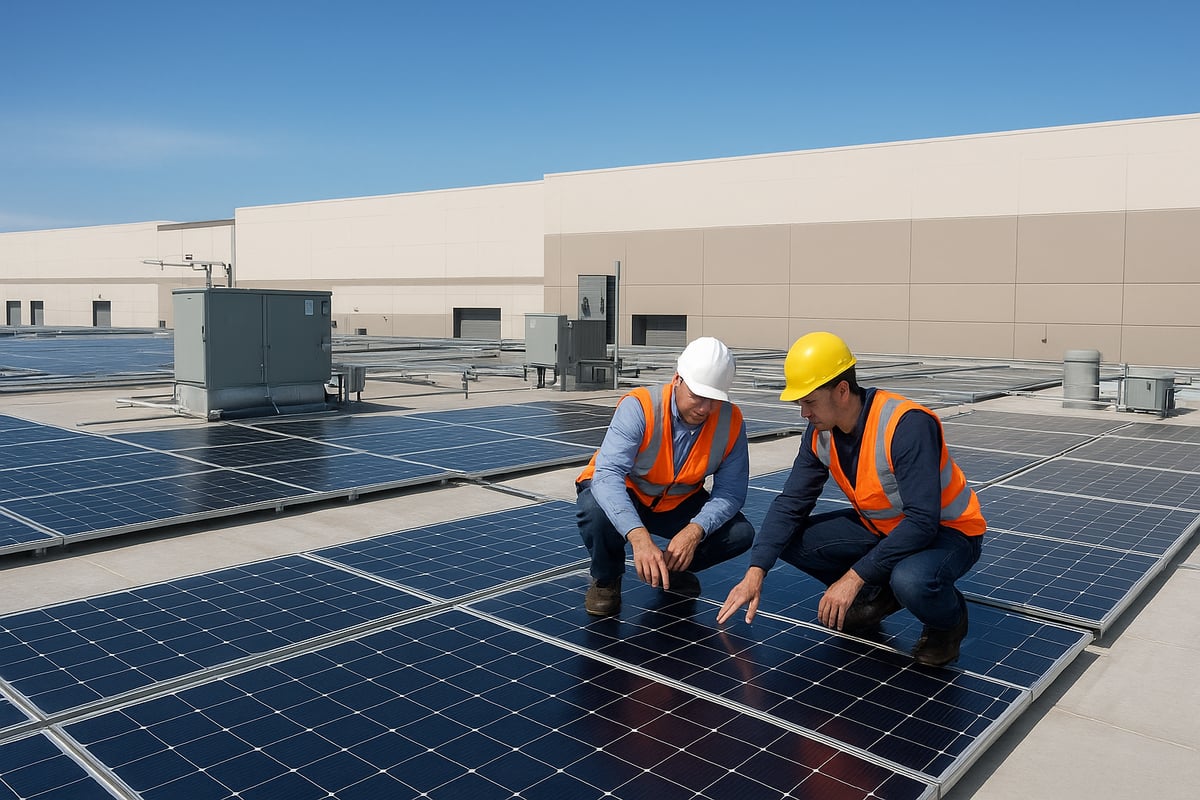
The most common metric for evaluating commercial solar panel installation cost is price per watt. In 2025, national averages are projected to range from $1.60 to $2.20 per watt for turnkey commercial systems. State-specific pricing varies, with regions like Texas typically 7.6% below the national average, offering attractive economics for large-scale projects.
Here’s a snapshot of average installed costs:
| Region | Avg. Cost ($/W) | Notable Factors |
|---|---|---|
| National Average | $1.90 | Standard benchmark |
| Texas | $1.75 | Lower labor, higher demand |
| New Jersey | $2.05 | Incentives, higher labor |
Material, labor, and soft costs make up the bulk of your investment. As of 2023, the U.S. commercial solar system costs 2023 report showed a steady decline, and 2025 projections continue this trend. For a 100 kW system, expect a pre-incentive price between $160,000 and $220,000, depending on site and design.
Accurate system sizing and utility bill analysis are critical to avoid undersizing or overspending. Factoring in future energy needs can further optimize your long-term commercial solar panel installation cost.
Each commercial solar panel installation cost is shaped by distinct line items. Panels and inverters account for 45–55% of total system cost, with the remainder allocated to racking, labor, permitting, and soft costs.
Key cost components include:
Selecting high-efficiency modules or premium inverters can increase upfront cost but often delivers higher lifetime savings. For facilities in New Jersey, code compliance and weather requirements may add to the commercial solar panel installation cost, but incentives can offset much of this investment.
Cost scenarios illustrate how the commercial solar panel installation cost varies by project size and complexity:
For example, a medical center may face higher soft costs due to stringent permitting, while a logistics center benefits from economies of scale. Each scenario highlights the value of a tailored approach to commercial solar panel installation cost planning.
A thorough review of your site, usage profile, and available incentives is essential for an accurate estimate. Work with experienced partners to ensure your project delivers long-term asset value and stable energy savings. Each scenario highlights how commercial solar panel installation cost shifts with system size and property type.
Rising utility costs and regulatory changes are making commercial solar more attractive than ever for New Jersey businesses. The right financing strategy is critical to maximize savings, control risk, and improve property value. Understanding how each option affects your commercial solar panel installation cost will help you choose the best path for your bottom line. Zero-CapEx structures are one of the most effective ways to reduce commercial solar panel installation cost.
Power Purchase Agreements (PPAs) and solar leases are the most popular zero-CapEx options. With a PPA, a third-party developer owns and operates the system on your roof. You pay only for the electricity produced, usually at a rate lower than your current utility price. This structure allows you to avoid any upfront commercial solar panel installation cost.
Solar leases offer a similar benefit but involve fixed monthly payments for system use. Both models keep the system off your balance sheet and shift performance risk to the provider. Typical PPA contracts lock in energy rates for 15–25 years, protecting against utility price hikes.
Consider this comparison:
| Option | Upfront Cost | Ownership | Savings | Accounting Impact |
|---|---|---|---|---|
| PPA | $0 | Provider | High | Off-balance sheet |
| Lease | $0 | Provider | Moderate | Off-balance sheet |
For more details on structuring the best deal for your business and understanding all implications for your commercial solar panel installation cost, see Financing solar purchases for businesses.
Outright ownership means you pay the full commercial solar panel installation cost upfront. This option maximizes long-term savings, as you keep all the energy bill reductions, incentives, and tax benefits. Businesses that have strong cash reserves or access to low-cost capital often prefer this model.
A direct purchase allows you to claim the full 30% federal Investment Tax Credit (ITC), accelerated depreciation through MACRS, and state incentives. The system becomes a physical asset, improving your property’s value and net operating income.
However, the upfront investment can be significant, especially for large facilities. It is essential to model payback periods, typically ranging from three to seven years, and ensure the system matches your long-term property strategy. This approach works well for owner-occupiers, REITs, and investors looking for predictable returns.
Many commercial property owners are unaware that their roof can generate income without any commercial solar panel installation cost. By leasing roof space to a solar developer, you receive fixed annual payments while the provider installs, owns, and operates the system.
This arrangement is ideal for property owners who want to avoid operational involvement but still benefit from solar. It is especially valuable for retail centers, warehouses, and multi-tenant buildings with large, underused roofs. Some developers also offer to bundle roof replacement with the solar lease, further reducing capital expenditure.
Participating in community solar projects can also unlock new revenue streams. For example, a shopping center might host a shared solar array and earn lease payments while providing clean energy to local businesses or residents. This model diversifies income and strengthens property appeal.
Hybrid structures combine elements of ownership, leasing, and third-party investment to optimize savings, risk, and flexibility. In an investor-funded model, outside capital covers the commercial solar panel installation cost, while the property owner may share in the system’s financial benefits.
Some large portfolios use sale-leaseback or partnership flips, allowing them to monetize tax credits and incentives without tying up capital. Grants, rebates, and green bonds can further lower the net investment required.
These models are often tailored for complex portfolios or organizations with unique financial constraints. They allow for custom risk-sharing, creative project structuring, and alignment with sustainability goals. Working with experienced partners is essential to maximize the advantages and ensure compliance with incentive requirements.
Solar Cents delivers end-to-end commercial solar solutions with zero upfront commercial solar panel installation cost. Their team manages every aspect, from feasibility and financing to engineering, construction, and long-term maintenance.
Property owners can choose from PPAs, direct purchase, roof leasing, or microgrid options, depending on their business goals. Solar Cents leverages federal and state incentives, including the 30% ITC and New Jersey’s ADI program, to maximize project savings. Their track record spans over 175 MW of complex commercial installations, including portfolios with challenging roof or electrical conditions.
By partnering with Solar Cents, businesses stabilize energy costs, boost NOI, and enhance property value—without the financial burden of a large capital outlay. Their flexible, turnkey approach is designed for asset managers, REITs, and facility owners seeking reliable long-term returns.
Incentives That Lower Your Commercial Solar Panel Installation Cost in 2025
Federal and state incentives are pivotal in lowering the commercial solar panel installation cost for businesses in 2025. Understanding how to leverage these programs can dramatically improve the ROI of on-site solar projects while reducing upfront and long-term expenses.
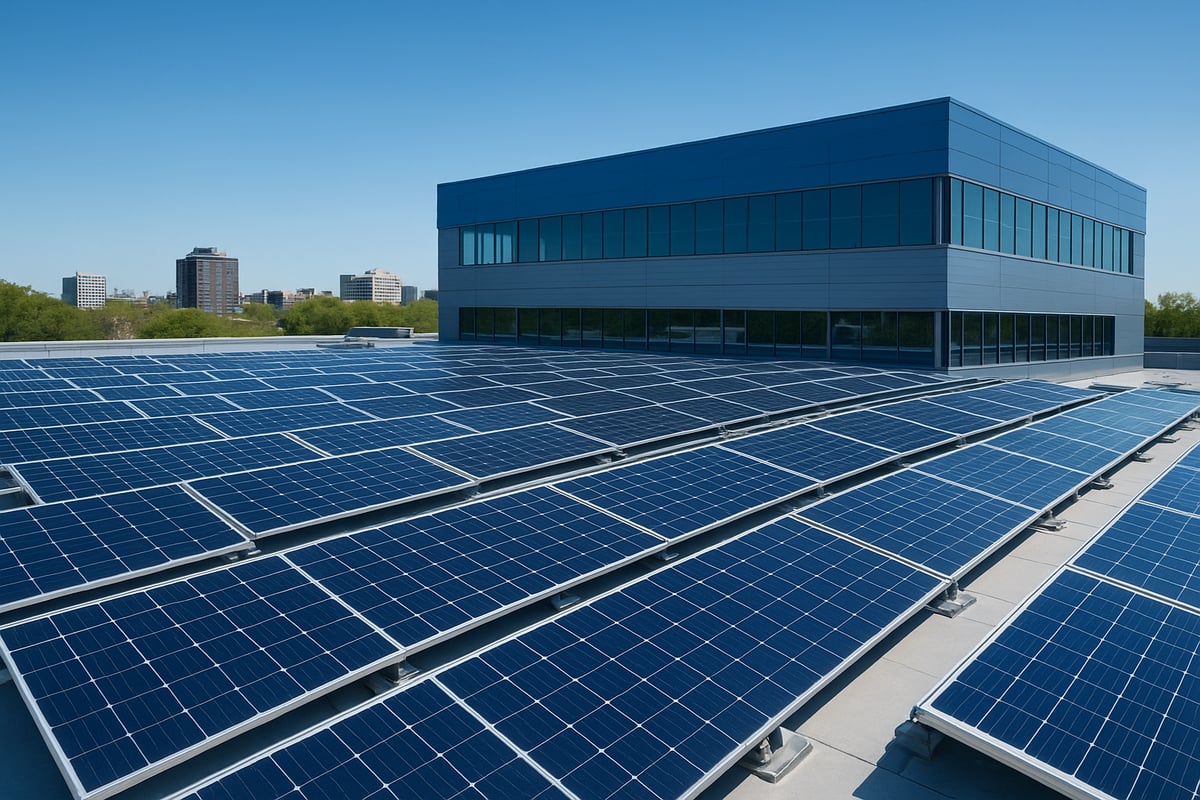
The federal Investment Tax Credit (ITC) continues to drive down commercial solar panel installation cost for businesses. In 2025, the ITC remains at 30 percent for eligible commercial projects, directly reducing tax liability on a dollar-for-dollar basis. Bonus credits can further enhance the value for projects that use domestic content, are located in energy communities, or serve low-income areas.
MACRS (Modified Accelerated Cost Recovery System) allows property owners to depreciate the value of their solar system over five years. This accelerated depreciation generates significant tax savings in the early years of operation. By combining the ITC and MACRS, many businesses see a reduction in commercial solar panel installation cost by more than 50 percent in year one. These federal incentives are essential for maximizing immediate ROI.
State and local programs play a critical role in further reducing commercial solar panel installation cost, especially in New Jersey. The state’s ADI (Administratively Determined Incentive) program compensates solar system owners for every kilowatt-hour generated, providing a strong revenue stream. Other states offer rebates, grants, or Solar Renewable Energy Credit (SREC) markets, each with unique eligibility criteria and payout structures.
For example, New Jersey businesses can leverage the ITC, ADI, and SRECs to shorten payback periods and boost project returns. To gain a deeper understanding of how these incentives impact your project, review this commercial solar panel cost breakdown for a comprehensive look at incentives and project economics.
Many utilities offer upfront rebates or performance-based incentives that directly lower commercial solar panel installation cost. These programs reduce capital requirements and can be stacked with federal and state incentives for maximum effect. Demand response programs also reward businesses for shifting energy usage or feeding excess generation into the grid during peak periods, creating additional revenue streams.
Participation in utility rebate or demand response programs often requires compliance with specific interconnection standards and ongoing reporting. For businesses in New Jersey and similar markets, these programs can mean the difference between a marginal and a highly profitable solar investment.
The most successful commercial solar projects combine federal, state, local, and utility incentives to drive down commercial solar panel installation cost and accelerate payback. Strategic stacking of programs like the ITC, MACRS, ADI, SRECs, and utility rebates can yield savings that far exceed initial estimates.
Timing and documentation are critical. Businesses must meet application deadlines and maintain compliance to secure all available incentives. By planning ahead and working with experienced partners, property owners can transform rising energy expenses into long-term savings and increased asset value.
Calculating the return on investment for a commercial solar panel installation cost is essential for every property owner and asset manager. A clear understanding of ROI and payback helps decision-makers justify the investment and unlock long-term savings. In 2025, the dynamics of energy pricing, evolving incentives, and new financing models create a strong environment for maximizing value from commercial solar.
For more insights, visit our How it Works Page.
Determining ROI starts with the total commercial solar panel installation cost, minus all applicable incentives and tax credits. The net cost is compared to projected annual energy savings to estimate payback years. In 2025, typical payback periods range from 3 to 7 years, depending on system size, financing structure, and utility rates.
ROI Calculation Table
| System Size | Net Cost After Incentives | Annual Savings | Payback Period |
|---|---|---|---|
| 100 kW | $140,000 | $22,000 | 6.4 years |
| 500 kW | $650,000 | $125,000 | 5.2 years |
| 1 MW | $1,200,000 | $260,000 | 4.6 years |
Payback is fastest for larger systems or in regions with higher utility prices, such as New Jersey. Financing models like PPAs can deliver immediate savings without upfront capital, while direct purchase maximizes long-term ROI through depreciation and tax benefits. Always align your chosen model with your organization’s financial goals.
See updated national pricing data from the U.S. Department of Energy.
Beyond energy savings, a well-structured commercial solar panel installation cost strategy directly enhances net operating income (NOI) and property value. Lower utility expenses boost NOI, which increases the property’s appraised value and can improve cap rates for investors. Solar-equipped buildings often command premium prices in competitive markets.
For detailed insights on how solar increases commercial property value, explore Ways solar increases commercial property value. Appraisers increasingly recognize on-site generation as a tangible asset, factoring in both operating savings and tenant appeal.
A recent case study: an office building in New Jersey installed a 250 kW system with zero-CapEx. The resulting $40,000 annual savings raised NOI and led to a $550,000 property value increase at an 8 percent cap rate.
One of the most significant advantages of investing in commercial solar panel installation cost is the ability to lock in predictable energy expenses. Utility rates in New Jersey have risen steadily, and future projections suggest ongoing volatility due to regulatory changes and grid constraints.
By generating power on-site, businesses shield themselves from these unpredictable increases. PPAs and leases can fix energy costs for 15 to 25 years, supporting long-term budget stability. This certainty is a major driver for REITs and property managers seeking to control operating expenses and protect margins.
A commercial solar panel installation cost analysis must factor in system performance and ongoing management. Reputable providers offer production guarantees, ensuring the system delivers expected output. Operations and maintenance (O&M) contracts cover routine inspections, preventive care, and rapid response to any issues.
Modern monitoring platforms provide real-time data on system health and savings. This transparency empowers property owners to track ROI and optimize performance year after year. Proactive O&M reduces downtime and protects your investment.
Addressing risks is key to a successful commercial solar panel installation cost project. High-quality panels and inverters come with warranties of 20 to 25 years. These warranties are typically transferable, protecting value if the property is sold. Exit strategies should be reviewed before signing a PPA or lease—options may include system buyout, transfer, or contract renewal.
Residual value at contract end can be significant, especially if the system is maintained well and utility rates have climbed. Understanding these factors ensures your investment continues to deliver value throughout its operational life.
Planning a successful commercial solar project in 2025 requires a structured, detail-oriented approach. Each phase directly impacts your commercial solar panel installation cost, influencing both immediate expenses and long-term value. Below is a step-by-step guide tailored for business owners, property managers, and asset stakeholders seeking optimal ROI and minimal risk.
Begin by evaluating your property’s physical and electrical readiness. A comprehensive site assessment reviews the roof’s structural integrity, age, and available space. Electrical infrastructure is analyzed to identify potential upgrades or constraints.
This stage includes a detailed utility bill analysis to map your energy consumption, peak demand, and load profiles. Accurately sizing your system is critical to controlling commercial solar panel installation cost and maximizing future savings.
Consult with experienced professionals for feasibility studies, shading analysis, and engineering checks. For a deeper dive into the process and cost drivers, review How commercial solar works.
Once feasibility is confirmed, system design begins. Engineers tailor a layout to your roof type, considering factors like orientation, tilt, and shading. The choice between rooftop, carport, or ground-mount systems affects commercial solar panel installation cost and energy yield.
Selecting high-efficiency panels and inverters that match your energy needs is essential. Design decisions also account for future expansion, code compliance, and integration with potential battery storage or EV charging. Accurate engineering ensures all components work together to deliver predictable returns.
This critical phase determines the best approach to financing your system. Compare zero-CapEx options like PPAs and leases against direct purchase or investor-funded models. Build a business case by modeling commercial solar panel installation cost, projected energy savings, and available incentives.
Analyze eligibility for federal ITC, MACRS depreciation, and state programs such as New Jersey’s ADI. Layering incentives can significantly reduce payback time. A robust financial model enables stakeholders to understand ROI, cash flow impacts, and long-term value creation.
Issue a Request for Proposal (RFP) to qualified EPC contractors. Evaluate bids based on experience, pricing transparency, and track record. Detailed contracts should specify commercial solar panel installation cost, equipment brands, warranties, and performance guarantees.
Negotiate clear milestones, payment terms, and O&M agreements. Ensure the contract covers contingencies for roof repairs or permitting delays. Selecting the right partner minimizes risk and ensures your project remains on budget and schedule.
Navigating local permitting and utility interconnection is essential for timely execution. Begin by submitting engineering drawings and applications to authorities. Fees, inspections, and utility requirements can affect commercial solar panel installation cost and project timelines.
Factor in time for zoning reviews, fire code checks, and utility studies. Maintain open communication with permitting offices and utilities. Proactive management of this phase prevents costly delays and ensures all approvals are secured before construction begins.
Construction should be scheduled to minimize business disruption. The process includes roof preparation, equipment delivery, and installation by certified crews. Safety protocols are critical at every stage.
System commissioning involves rigorous testing to verify performance and code compliance. Final utility inspections lead to interconnection approval and system activation. Each completed milestone is documented for warranty and incentive compliance, protecting your commercial solar panel installation cost investment.
After commissioning, set up real-time monitoring to track production and detect issues early. Schedule preventive maintenance and keep detailed records for warranty claims. Ongoing management safeguards system performance, ensuring savings projected from your commercial solar panel installation cost are fully realized.
Prepare for future upgrades or expansion as energy needs evolve. Well-maintained systems deliver stable returns, enhance asset value, and support sustainability goals.
| Common Pitfall | How to Avoid |
|---|---|
| Incomplete site assessment | Employ professional engineering reviews |
| Overlooking roof condition | Schedule roof inspection and repairs upfront |
| Missing incentive deadlines | Assign a dedicated incentive coordinator |
| Unclear contract terms | Use legal review for all agreements |
Learning from recent commercial solar installations, proactive planning at every stage ensures predictable costs, maximized incentives, and long-term value.
Curious about the real commercial solar panel installation cost in 2025? Here are answers to the most common questions property owners and facility managers ask.
What is the average price per watt for commercial solar in 2025?
The commercial solar panel installation cost in 2025 averages $1.65 to $2.10 per watt, with regional differences. For historical context and current drivers, see Solar panel price trends.
How do I know if my property qualifies for zero-CapEx solar?
Eligibility depends on your roof’s size, condition, and energy usage. Properties with stable occupancy and utility bills above $2,000/month are strong candidates.
What are the most valuable incentives for New Jersey businesses?
New Jersey’s ADI program, the 30% federal ITC, and SREC markets offer significant savings, reducing commercial solar panel installation cost and accelerating payback.
How long does a typical commercial solar installation take?
Most projects complete within three to six months, depending on property size and permitting. The Record-breaking commercial solar installations 2025 surge shows timelines are improving.
Can I replace my roof and install solar at the same time?
Yes, integrating roof replacement and solar maximizes incentives and futureproofs your asset with minimal disruption.
What happens if I sell my property before the PPA or lease ends?
PPAs and leases are transferable to new owners, preserving energy savings and contract terms.
How do I ensure my system performs as promised?
Choose a provider offering production guarantees, monitoring, and robust O&M services for consistent results.
Where can I get a reliable cost estimate for my building?
Request a custom proposal based on your utility bills and site conditions from a reputable commercial solar provider.
As you’ve seen, understanding the true cost of commercial solar installation in 2025 involves much more than just equipment prices—it’s about maximizing value, leveraging incentives, and making smart decisions for your business’s future. If you’re ready to take control of rising energy costs and want clarity on exactly what solar could mean for your property, the next step is simple. Let’s connect and discuss your unique goals, local incentives, and the most cost effective approach for your building. You can Schedule a Free Commercial Solar Assessment to get tailored insights and a clear path forward.
